
There are some people who spend years learning how a system works and, once they understand it properly, realise they can no longer ignore what that system is doing. Veronica Gordon is one of those people.
For more than fifteen years she worked in broadcast journalism, while at the same time being involved in community activism with Black and ethnically diverse communities across the South. Those two parts of her life ran alongside each other, but they did not tell the same story. In one space she was seeing real people, real families, community work, joy, ambition, ordinary life and all the beautiful, complicated things that make up a place. In the other she was watching those same communities flattened into something smaller, more sensational and, all too often, more negative.
“I was getting frustrated,” she tells me. “The beautiful things that I was seeing in the communities were not reflected in the media around us.”
That disconnect eventually became impossible to ignore.
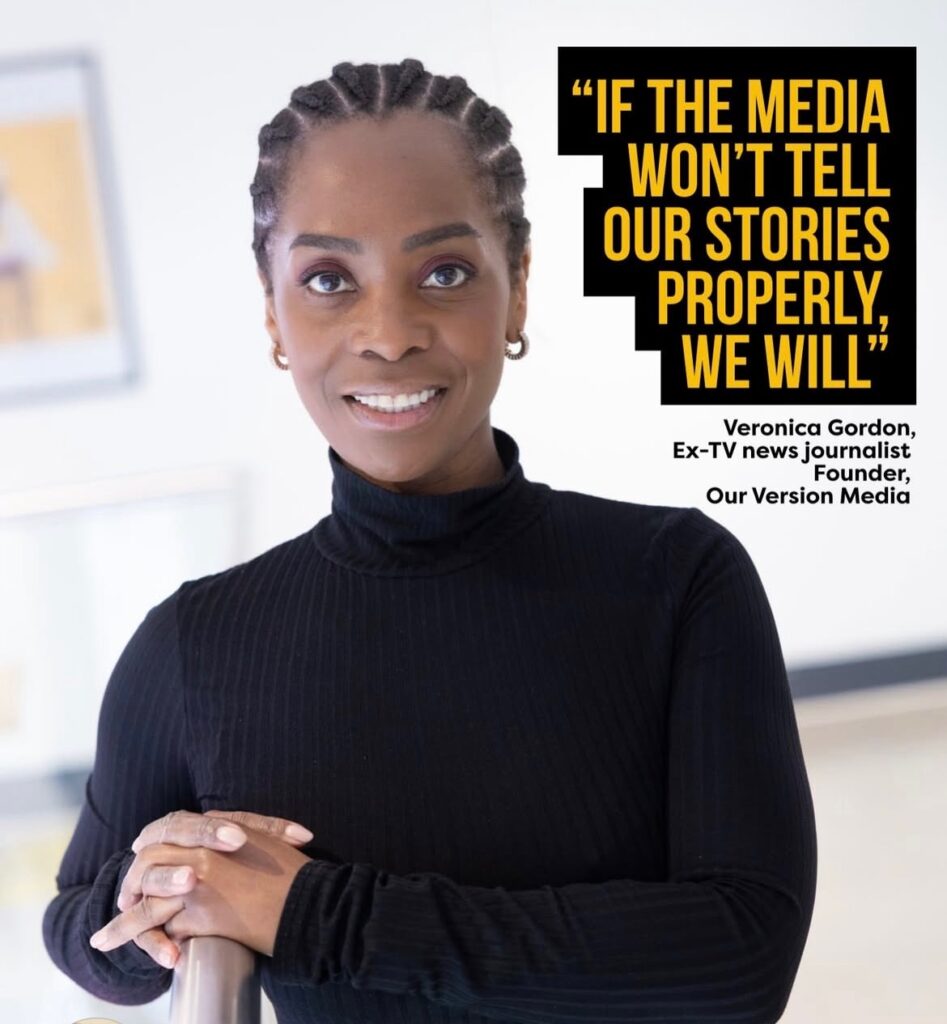
“I come from newsrooms. I see how toxic, and how easily, and how carelessly journalists put across certain narratives of certain groups in order to maybe get more eyes on their six o’clock news or on their website.”
And this is really where Our Version Media begins. Not simply with frustration at a lack of diversity, but with Veronica’s understanding of how stories are constructed, who gets framed in what way, what gets repeated, and what happens when communities are made to live beneath narratives they did not create.
In 2020, Our Version Media carried out a media and wellbeing survey with Black people living in Southampton, asking them about their experiences of local media and local news. More than 75% said they felt Black people were portrayed negatively.
But what mattered just as much as that figure was the emotional response behind it.
“Most of them, nearly all of them, said that it made them feel sad, depressed, like we don’t matter, concerned for the younger generation.”
When they asked whether people had seen positive stories about Black people, the numbers were smaller, but those stories did exist. And when they asked how those stories made people feel, the language changed completely.
“Inspired. Hopeful. Like we matter.”
For Veronica, the meaning of that was unmistakable.
“What that showed for Our Version Media was a really clear link between types of media coverage and people’s wellbeing.”
That connection between narrative and wellbeing sits at the heart of her work. It is also why, as our conversation unfolds, it becomes obvious that Our Version Media is not simply a media organisation and Veronica is not simply trying to increase the number of Black faces we see on television or in newspapers. What she is talking about goes much deeper than representation for representation’s sake. It is about who gets to define people in the first place.
“Narratives are absolutely critical in how we perceive ourselves, how we perceive others, and how we perceive the world around us.”
Veronica’s background is actually in social sciences, and long before Our Version Media existed she had been thinking about the power of labelling and the damage that can be done when the same messages about a group are repeated often enough.
“If you tell people they’re stupid enough, then they believe they’re stupid. You tell people they’re worthless enough, then they believe they’re worthless.”
Her dissertation focused on Black boys in secondary school and how their aspirations changed as they moved through the education system.
“They went into secondary school with high aspirations, and by the end of secondary school it had knocked it out of them so much they literally thought they were worthless.”
She talks about teachers seeing them differently, harsher punishments, exclusions, isolation, and the damage caused when assumptions about intelligence and behaviour become embedded into everyday systems.
“When you’re telling teachers that Black students are more stupid, they’re less intelligent, then those teachers treat those Black students like that.”
It is impossible to separate that from the work she does now.
“We have to smash through these narratives. We have to dismantle them and stop them from happening.”
That urgency comes through again and again when Veronica talks about the work of Our Version Media. Mobile storytelling is their longest-running and most popular training programme. People learn how to create, film and edit their own mobile videos and stories, and then use those skills in whatever way makes sense for their lives. Some use them to promote community groups. Others use them for businesses. Some have used them to gain opportunities or promotions at work. And then there are the quieter outcomes, the ones that might never appear in an impact report but still matter enormously.
Veronica tells me about people who have been on holidays many times and come home wishing they had taken better photographs or more videos, but who, after the training, begin properly recording their travels.
“They’re capturing their whole family lives and community lives, and these are moments and memories that they’re capturing.”
There is something deceptively powerful in that, because storytelling isn’t just about getting on the news, it’s our personal about archives and memories.
While Our Version Media also works with journalists and news organisations, Veronica is very clear that mainstream media is not the ultimate prize.
“Getting on mainstream traditional legacy news and media is not a priority for me.”
She understands why it matters to some people and she will work with journalists who genuinely want to do better, but she has no interest in the kind of diversity she saw too often during her own career.
“I’ve worked in newsrooms where it’s like, ‘Oh, tick the box. There’s a Black person on television. Tick the box. There’s somebody in a wheelchair.’ That performative type of thing.”
Instead, she talks about working with journalists who go beyond that, connecting people with media when it genuinely benefits the communities involved, while also building the skills for people to bypass gatekeepers entirely.
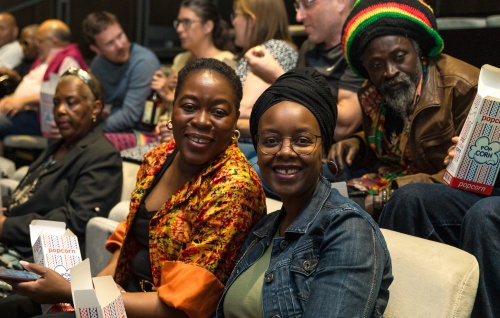
That same philosophy appears in one of my favourite parts of our conversation: the Black in Focus cinema night. The idea is beautifully simple. Show Black British films featuring Black people without automatically centring trauma, slavery, gangs, violence or struggle.
“I wanted films of Black love, just normal Black lives. Films that feel good. That show Black people in our diversity.”
It sounds almost obvious when she says it. Of course those films should exist. Of course there should be whole cinema programmes where Black audiences can sit down and watch themselves represented in stories about love, friendship, humour, family and ordinary life.
Except there is a problem.
“There is not a massive list of films at all.”
And suddenly the point becomes much bigger than one film night.
Veronica explains that she has spent more than fifteen years challenging cinemas in Southampton over this. Uplifting Black films would be available elsewhere across the country but not shown locally, or would appear at times when very few people could realistically attend. Eventually the answer became very Veronica.
“You’re not going to do it? We will do it ourselves. And we’re not even a cinema.”
There is something in that sentence that seems to capture the whole philosophy behind her work. She is willing to challenge the gatekeeper, absolutely, but she is not prepared to spend forever standing outside the gate asking to be let in. Instead, she builds doors.
And it’s because of that attitude that Our Version Media has grown so much. They have trained NHS patient-facing staff in mobile storytelling and supported members of Black communities to create their own videos about their experiences with health services, allowing organisations to receive first-hand feedback rather than simply producing another leaflet explaining what they think people need. They have worked with housing associations to challenge stigma around people living in social housing. They are training people to become mobile storytelling trainers themselves, creating freelance employment while spreading those skills into more communities.
In 2023, Our Version Media took part in a national evaluation of social enterprises. Ninety-three per cent of the people surveyed who had worked with the organisation said it had made a positive impact in their community. Veronica describes receiving the results as “heartwarming,” partly because the research revealed effects of the work that even they had not realised were happening.
And then our conversation moves towards belonging and The Nightjar Project.
“The Nightjar Project makes my heart sing,” Veronica says.
She grew up in Britain with Caribbean parents.
“My parents were both born in the Caribbean, and my siblings and I grew up in a culture and country that my parents didn’t grow up in.”
She talks about those cultures sometimes pulling against each other — a stricter Caribbean upbringing beside a more liberal British society — and what it meant to grow up between them.
“I’m Jamaican, Trinidadian and born in Britain. So that’s those three identities, and for me, I don’t have to be one of them. It’s all of them that make me who I am.”
While this sounds simple it’s actually one of the most important, because so much of belonging is about being asked to simplify yourself for other people.
Choose one identity, one home, and leave the rest somewhere else, and that applies to professional spaces also.
During her years working in television news there were moments when she felt that even something as personal and ordinary as her hair could become another negotiation about whether she fit. She remembers having her hair braided while doing newsroom live training and a colleague asking, “You’re not going to wear your hair like that, are you?”
Before joining that broadcaster she had decided to wear her natural Afro hair after years of relaxing it. Once she began working there, she went back to relaxing it. That experience has directly shaped the organisation she chose to build.
“With Our Version Media, I created an organisation where I feel people can come in and be their whole self in our space. You don’t have to come and speak a certain way. You don’t have to come from a certain class.”
And this is where Our Version Media and The Nightjar meet.
The Nightjar has always been about the possibility of carrying more than one home, culture and identity without having to cut yourself into smaller pieces in order to belong. Veronica understands that instinctively.
“You don’t have to choose between either of them. It doesn’t matter if you love one more than the other — but you can have a loyalty to both, or you can love both, and you can value both.”
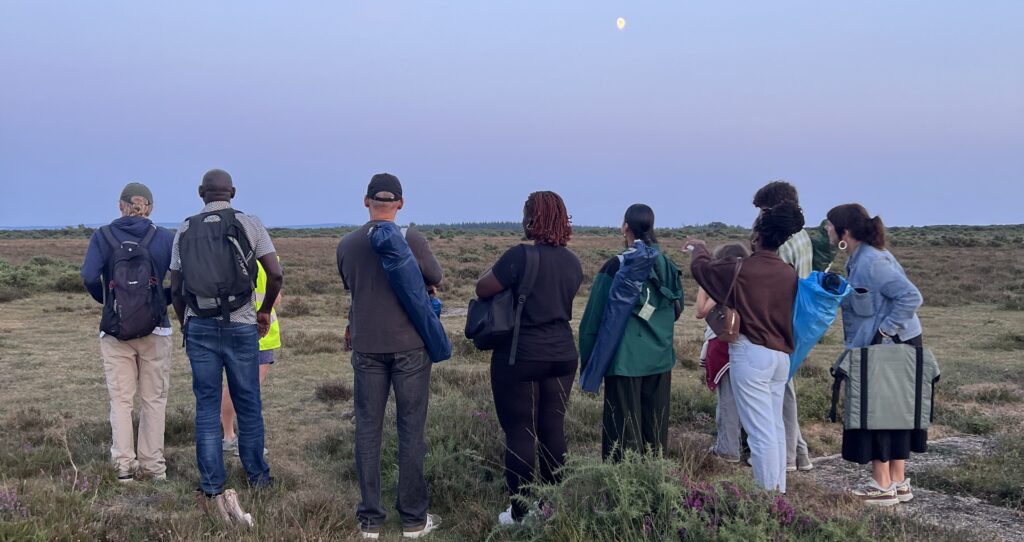
She talks about the Nightjar bird itself, travelling between West Africa and Britain each year, and how extraordinary she finds that migration.
“It’s a project about a bird, but there’s so much in there for us to learn as humans.”
And I think that line could equally describe the work Veronica has built. On paper, Our Version Media is about digital storytelling, but spend any amount of time talking to Veronica and it becomes clear that storytelling is only the method. The deeper work is about ownership and who gets to tell us who we are. About what happens when people who have spent years being described by somebody else pick up the camera, the microphone, the phone or the pen and say: actually, let me show you.
Not the headline or stereotype.
Not the version of us that gets the most clicks.
Our version.
by Adeola Sheehy for African Activities
0 Comments