
Over the past few years, conversations around belonging, identity, and representation in the New Forest have been quietly growing. In response to that, writer, community artist and researcher Amy Hardingson, was commissioned by Artful Scribe to explore the diversity of the New Forest and the barriers that can make arts and cultural spaces feel inaccessible or exclusionary. In this extended Nightjar conversation, Amy reflects on identity, heritage, parenting, creativity, community building, and what it means to create spaces where people can show up fully as themselves.
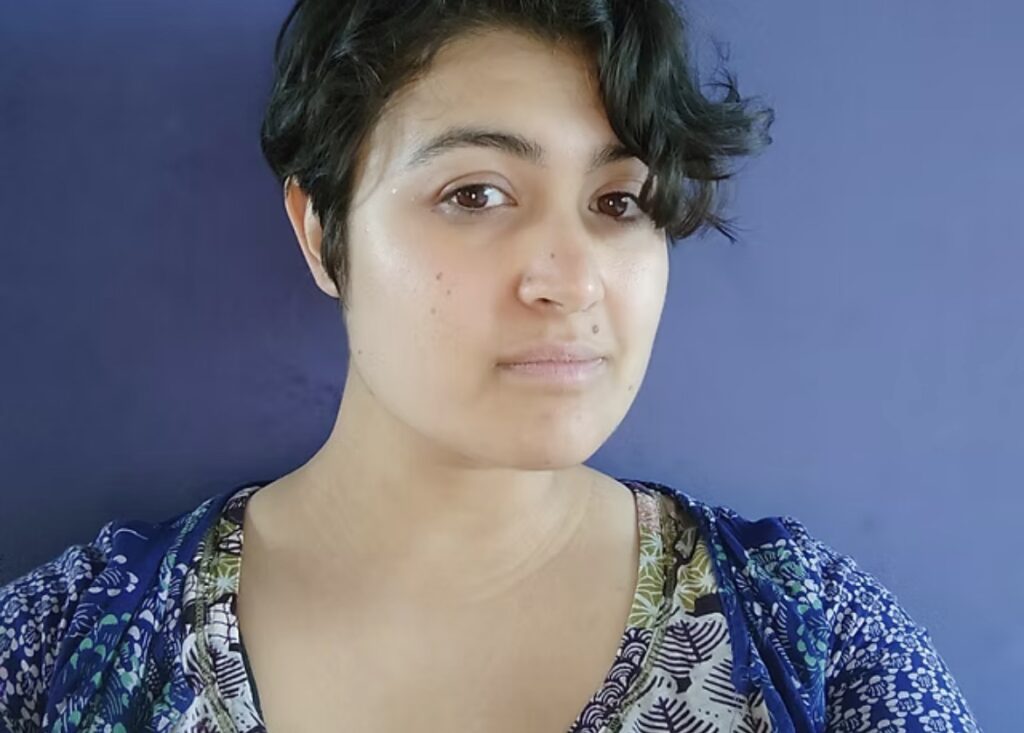
Over a year ago now you were commissioned by Artful Scribe to conduct a research project to explore ethnic minorities in the New Forest and look at the kinds of change needed to have truly inclusive arts and cultural events in the local area. What would you say the central finding was and have you seen changes implemented in response to that work?
I’d say the central finding was that we need to prioritise supporting grassroots artists and empowering cultural communities who live locally to the New Forest.
Artists who are helicoptered in from other areas to run an arts project in the New Forest are unable to build a community over time, and they have to spend much of their time understanding the nuances and complexities of New Forest life beyond the tourism propaganda.
It’s also very difficult for people to hear about new one-off events or niche projects in time to take part. Many of the people I interviewed spoke of their sadness at hearing about an event they would have loved to attend if they had heard about it in time.
People are hungry to find and grow community on their doorstep, and the Nightjar project has really proved that. I was really delighted when the first Nightjar newsletter arrived in my inbox as I think this is the perfect way to grow our diverse community and keep in the know about things going on locally that may especially interest us. It’s just so powerful to gather our voices together and find our experiences reflected and affirmed.
One of the most simple yet powerful things my research did was just to put numbers on things. We can often feel like the ‘only’ one in the rooms and spaces we inhabit, and it’s powerful to know that there are more than 10,000 ethnic minority individuals living in the New Forest. It’s a simple factual piece of information, and yet I and many other people were deeply moved upon learning it. And then suddenly the idea of gathering together 50 or 100 of those people feels so much more do-able.
The idea of demanding funding and resources to cater to us feels much more feasible. In a world where we have to use data-based evidence to argue our budget for art, I’m very glad that my research is helping more projects to get the funding they need and deserve.
What changes would you like to see within the New Forest area for people of mixed heritage or with personal experience of migration?
I’d like for people to feel a much more tangible sense of safety. I’d like to see more systemic change in New Forest workplaces, schools, organisations and institutions that tackle racism and discrimination. I’d like to see anti-racism work expanding in the New Forest. I’d love to see more community and visible support networks for ethnic minorities that people in the area can connect with. I would also like to see more opportunities for white British folk in the New Forest to connect with their ethnicities and folk practices to be celebrated alongside people of other/multiple/mixed heritage as that’s a key part of tackling racism (and the insecurities that often lead to it) that is often forgotten about.
As someone who identifies as British Eurasian, bisexual and non-binary, the Nightjar experience of having more than one home and more than one way of being which may not fit into the ‘mainstream’ is something you easily identify with. Can you tell us a little of your experience?
This is such a deep and thoughtful question, and I could dig into this topic for hours.
I think the main aspect of my experience of moving through the world is that when you are a both/and person across several different things it can cause confusion and disruption to the binary ways of thinking that much of the world is organised around. I don’t present any easy shortcuts.
A lot of the time people make inaccurate assumptions about me based on what I look like and how I present on any given day. And there was something about this regular experience of unintentionally causing confusion that really affected my sense of belonging and feeling of home as I grew up.
I’m the third-generation of my family growing up in the UK.
All of my immigrant family members (4 great grandparents and 2 grandparents) moved to the UK in the 1940s and 1950s. Travelling and keeping in touch across continents was not as easy back then. And for my Burmese family in particular, the political situation for our specific ethnic group meant returning even for a visit wasn’t a viable option.
By the time I was growing up in the 1990s there weren’t many relatives left alive overseas, and our multicultural family life was firmly rooted in the UK even as we celebrated or acknowledged our heritage and connections to other countries.
The fact that each of my family members had a different ethnicity, different ways of thinking about and relating to the world, and subtly different rules or customs in their house was my norm. But the very fact that a family like mine existed in suburban Southampton really blew people’s minds. And I remember moments where it dawned on me that everyone else in my class all had these things in common which I didn’t relate to, and not only that but it seemed like an injury to them for me to not relate to it.
My experiences were always marginal, the outlier, and surely attributable to my exotic family background (cue being grilled about why and how I did x, y or z differently to everyone else). Sometimes I look back and think that some of the reason why I was different or reacted differently in a given situation to classmates was actually rooted in being LGBT+, but when I was young it seemed like people outside of my family attributed anything different I did to my race.
I couldn’t change my face or skin colour, but I did learn to mask and edit myself in an attempt to fit in or just avoid some of these awkward conversations. And that’s how my internalised homophobia got locked into a toxic marriage with my internalised racism.
I sometimes picture it like there are all of these cogs of identity which can be set to different settings, and a lot of people will seek out people who match them, like finding a tuning fork at the same resonance. And I never exactly match with anyone, and at times in my life that has felt really lonely.
I remember once being nervous about going to a place where I wouldn’t know anyone, and being given the advice (by an older white lady, of course) to ‘find the people who look like you, and there’s a good chance you’ll have something in common’ and it just suddenly dawned on me that that is how so many people think, and that is why I have often found it really difficult making friends. Because most people look at me or start talking to me and in one way or another they will see ‘the other’. I felt very lost and like I probably didn’t fit in anywhere outside of the walls of my own house (and frequently even within them).
Realisations like this were not good for my mental health. I hit a low point in my mid-twenties where I feel like I read all of the self-help on the internet and I remember coming across multiple articles about how being mixed-race and being bisexual and being non-binary are all particularly associated with higher rates of depression and anxiety and triggering identity issues. For all of them, representation in our culture is low, and the societal pressure to mask and choose a side is high.
The advice was to find ways to feel pride, practice being completely honest and authentic to yourself, and connect with community. I was terrified by the idea but I also had hit what I wanted to be a rock bottom, and I was willing to try anything. I specifically came out to a number of friends, I cut my hair and changed the way I dressed to something that felt more like me, I researched my family history and learned more broadly about the 7 different cultures that my family comes from and began consciously engaging with my cultures outside of my family life for the first time ever.
The community part felt a lot more tricky, and was something I really yearned for. I had recently moved to Totton and it felt hard accessing minority community spaces and events (which very often seemed to be in London). At the same time, I decided to stand for election as a town councillor, figuring I’d be good at the role and it would help me get to know more people, and give me a chance to be the change I wanted to see. As it was, it was a really interesting practice for me in showing up and being authentic in a space that was anything but friendly to people outside of the majority.
Like most councils it was a space dominated by older middle class white men protective of the status quo. And there I was, campaigning for the standing orders to be changed to be gender inclusive and for my gendered title to be removed from my councillor name badge, and complaining about and eventually updating the equality policy, and embarking on all sorts of projects to improve and support diversity representation.
I came across a lot of bigotry, but I also earned respect from people across the political spectrum (even people who were intent on arguing with me on every point I raised). It was a huge way of showing up for myself. And at the same time, I was getting to know people who were at the heart of the Totton communities and being accepted and invited along for what I had to offer even as I was being so fully myself.
The first time I ever wore a Burmese Longyi outside of my house was at Totton’s civic centre council chambers. Who would have thought it? Totton became the first place I lived where I ever walked around and realised I felt a sense of belonging, and I think that was very tied up with the fact that for the first time I was showing up and being the whole of myself without shame, even if it confused other people.
In the past, when I didn’t feel at home in myself, it was hard to feel at home anywhere and I would always see the ways I was an outsider. When I began to feel more at home in myself, my sense of home grew outwards from me like an intricate web of connection, and this has become a really beautiful thing in my life.
So, to go back to the original question about my experiences not fitting into the mainstream – I would say that to begin with it made me feel very lonely and isolated, but now I feel more connected than ever.
I wouldn’t say that I feel like I have more than one home, but the home I have is very expansive and connected to many others. I’m different from a lot of people in a lot of nuanced ways, but I’m also privileged to be a bridge to a lot of connections. I sit at intersectional in-betweens rather than extremes and that’s very helpful for advocating for others, and that’s a joyful practice I show up to whenever and wherever I can.
How have your experiences growing up shaped the way you parent?
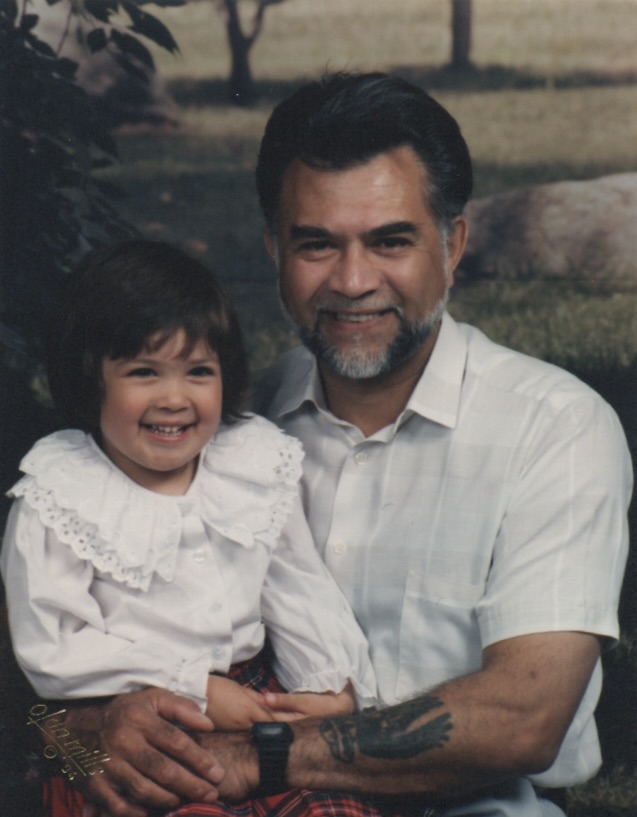
I think being around so many different cultures and having experiences of discrimination from several angles growing up filled me with a very strong sense of social justice, which has always been a big part of my parenting. I’ve always looked to actively teach my children about what I understand of how the world works, and to teach them critical thinking skills and empathy. Books are fantastic for this.
On the other hand, I recognise that my direct cultural experiences are and will be very different from my children who are growing up in their own context at a bigger distance from the members of our family who were migrants and navigating that shift is something I think about a lot.
My various bits of heritage were very tied up with specific relationships, and I was lucky to have those family members in my life well into adulthood. When those family members had all passed away I had to start thinking much more intentionally about weaving cultural and heritage activities into our home life if I wanted to preserve that connection. I stumbled and felt awkward and had big learning curves, but it was also a beautiful, loving part of my grief practice and another way to tangibly keep memories and relationships alive.
There is definitely a challenge in having many cultures part of our mix. I can’t manage to celebrate every cultural event for each heritage we have every year. I’m also blocked by gaps in my knowledge, or a lack of nearby communities. Some years I mark a few more, some a few less. I’ve discovered new things as well, things that weren’t part of my experiences with my family but which I learn about and think are really cool, really beautiful or sound delicious and decide to try.
Other things like language are much more challenging; I grew up around bilingual family members but other than a few bilingual picture books and a few phrases I try to use regularly it’s not something I’ve been able to weave into our family life. As a result, my kids are now growing up with a new mix of traditions that connect them to their heritage in a very different way to what I experienced. But it’s a beautiful connection that opens up a lot of conversations about our family history, and deep appreciation for different cultures (heritage to us or otherwise).
I also do make the effort to at least sometimes connect with wider cultural events, like trips to Chinatown for Lunar New Year, or visits to London museums to see specific exhibitions.
I’ve made my own scrapbook with family trees, photos of family members, and world maps showing where our family migrated from to help them understand our family history. I do all of these things to help them feel a sense of pride in all the amazing history and beautiful cultures which are a part of our DNA. I want for them to feel secure in those connections, and I already see in them that when they get questions they are at ease and confident about answering them, whereas I definitely felt awkward (especially if I didn’t know an answer I was ‘supposed’ to know).
My children are going to have their own very different experience to me, but I think all of this cultural work is also a way for me to connect with them, for them to understand parts of my identity and experiences that make up an important part of who I am. It requires effort, but it brings me so much joy and unique family memories.
As an artist you write and support others to do the same through workshops and as an accountability partner. Can you tell us more about your work and what you are writing at the moment?
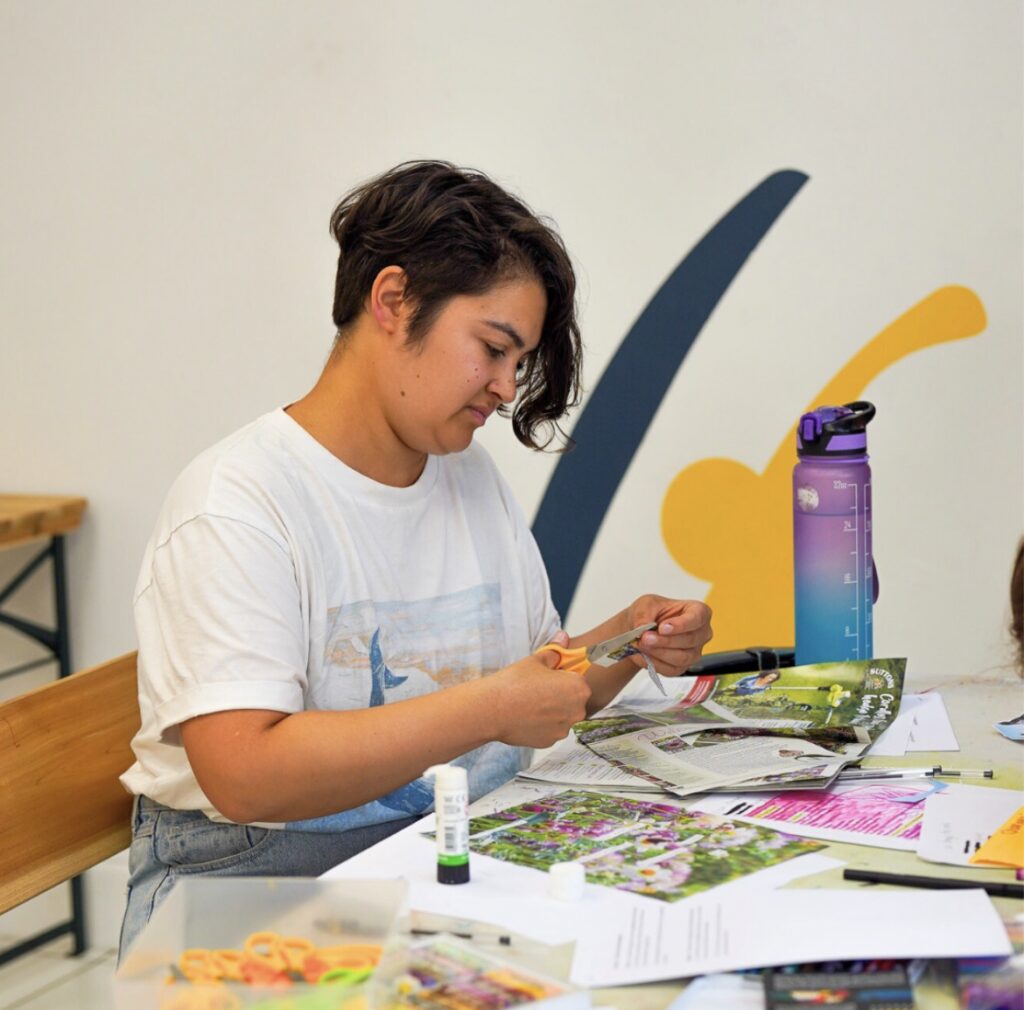
I see myself very much as a community artist. A lot of my work is about belonging, building community and empowering people (threads that I very much bring together from my lived experience). I really enjoy bringing people together in person and running creative workshops of all kinds. I also chair Boost – a climate action group in Totton, and I run Totton Railway Station’s adoption group where I’ve organised mural projects and art exhibitions.
In my personal writing practice, I’m interested in a lot of different things and I write about and explore them in many different ways. My poetry often explores my family history and direct lived experiences. But my prose writing is much more escapist – I frequently write fairytale, magical realism, historical fiction and fantasy.
I’m currently writing my first novel which is a queer historical fiction spy thriller set in Elizabethan England (which was a much more diverse world than most people imagine, and I really enjoy exploring the multi-cultural landscape of that time against a backdrop of the beginnings of colonialism and empire). And I’m also currently working on a collection of poetry, short stories and essays that explores ethnic diversity in the New Forest.
Running the research project with ArtfulScribe into this topic had a profound effect on me which I’m still processing, and I’m now the custodian of a lot of unheard stories and history which I’m desperate to share with a wider audience. My working title for the book is 1001 New Forest Nights and I hope to release it towards the end of 2026/beginning of 2027.
How can the Nightjar community find, follow and support you?
I’m on Instagram as @amyhardingson and my website is https://www.aj-hardingson.com/
You can also email me at amyhardingson@gmail.com . If you’re interested in anything I’ve mentioned here and want to find out more please do get in touch.
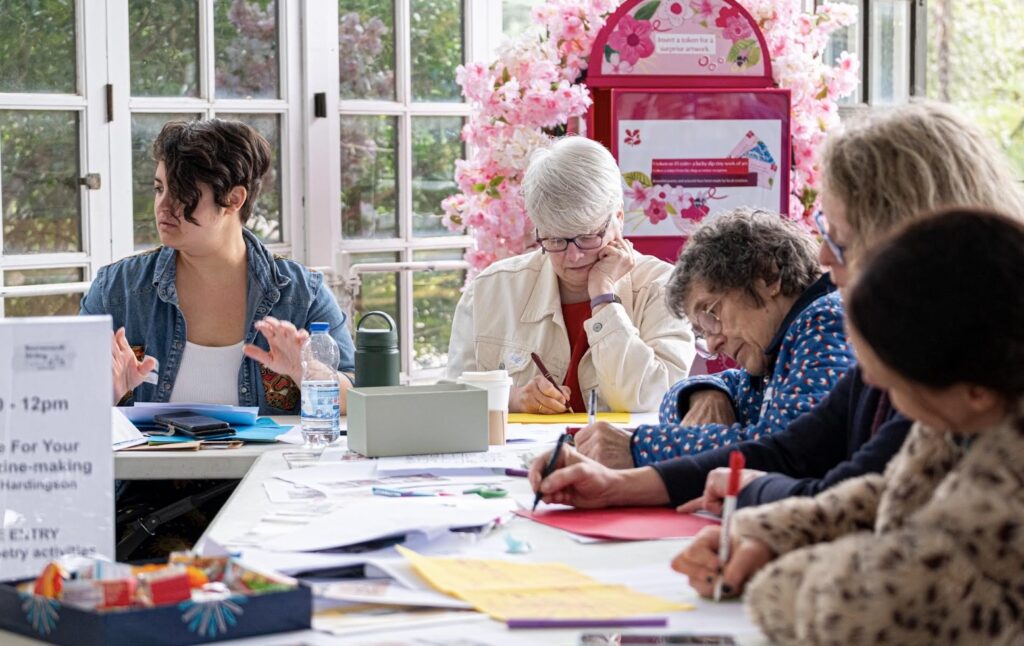
by Adeola Sheehy for African Activities
0 Comments